

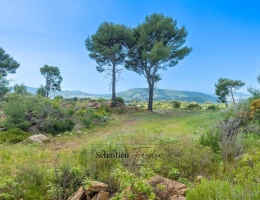
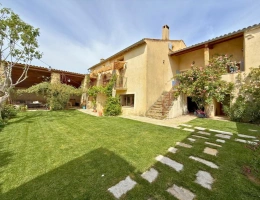
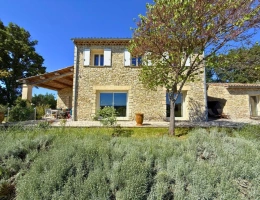
Anyone hunting for farms for sale in Alpes-Maritimes has to start from one fact: the cultivated area of this department is among the smallest in mainland France, squeezed for two generations between coastal building and sheer relief. What comes onto the market is therefore a few hectares of horticulture, an olive holding on dry-stone terraces or upland grazing rather than a single-block estate. Instructions reach us from growers stopping without a successor, from notarial offices on the Riviera, from rural property agencies and from succession advisers; usable area, water supply, access easements and tenure appear in every file. The whole set feeds the national inventory of farms for sale in France.
The sections below help judge a narrow market in which two comparable properties almost never appear in the same year: what a hectare is worth irrigated or dry, which sectors still hold, which districts repay prospecting, and which checks spare a bad surprise. For a first holding outside the family, our white paper « Créer une exploitation agricole » (in French) sets out the legal structure, available grants and the cash plan.
Land forms the base of a farm's value. DVF, the property sales database published by the French tax administration (vineyards excluded), records a 2025 median of €7,245 per hectare in Alpes-Maritimes (06), an average of €7,245 and 1 sales; four transactions in five fall between €7,245 and €7,245, against a national median of €5,307. * Fewer than 30 recorded sales: indicative value.
Against the Provence-Alpes-Côte d'Azur region, whose median is €13,518 per hectare, this department sits 46% lower. For commune-level detail and comparisons with neighbouring areas, see our land price observatory, then cost your purchase with our financial calculators.
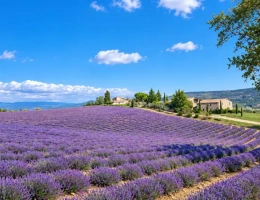
The Grasse country carries the department's farming signature. Specialist crops are regaining ground there around centifolia rose, jasmine, tuberose and iris, revived by perfume houses contracting acreage directly with growers; flower producers on the plain and the slopes add cut stems and foliage. Fruit growing comes down to the olive of the back country, trained on terraces held by dry-stone walls, plus a handful of citrus plots in sheltered coastal pockets. Market gardening survives on the urban fringe, selling straight to customers a few minutes away.
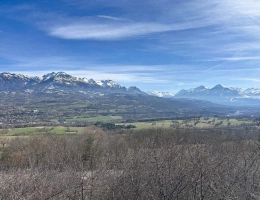
Above a thousand metres, pastoral farming takes over: sheep flocks run on rough grazing and summer pasture, dairy goat units processing on the spot, a few suckler cattle enterprises in the Tinée and Vésubie valleys. A working farm here rests less on ownership than on grazing agreements and communal land: the file has to be read through the deeds as much as through the cadastre, and value sits in the farm building, its winter access and the flock taken over.
The lower Var valley, between Carros, Saint-Martin-du-Var and the Nice plain, still holds glasshouses and irrigated parcels, but in a development corridor where every hectare is wanted: buying there is a matter of rare opportunity. The Grasse country, from Pégomas to Mouans-Sartoux and towards the Siagne, remains the clearest district for a horticultural takeover. The Vence country, the Caussols plateau and the hills above Tourrettes offer modest holdings mixing olives, aromatics and grazing.
Higher up, the Estéron, Tinée, Vésubie, Bévéra and Roya valleys, along with the back country around Puget-Théniers, hold most of the genuinely affordable properties: scattered parcels, old buildings, entry prices unrelated to the coastal strip. An agricultural property there means accepting distance from markets, narrow access roads and restoration work that is often heavy.
Residential demand is the first risk in any file here. A farm sold far above its farming value draws the attention of SAFER Provence-Alpes-Côte d'Azur, which the notary must inform of any intended sale and which may step into the buyer's place. A written, costed project with a production timetable weighs heavily in that decision. Check in parallel the local planning zoning, whether a protected farming zone applies, and what building rights genuinely attach to the existing structures.
Water and the right to farm come next. On the slopes, irrigation often depends on an old canal or a captured spring: ask for the entitlement, the rota and the condition of the works. Authorisation to farm falls under the regional structure plan, whose thresholds allow for the specialist productions that dominate here. Lastly, a tenant already installed retains the lease and holds first call should the owner sell; bare farmland offered without buildings answers to a different pricing logic again.
Supply renews slowly in this department: setting broad criteria and letting an e-mail alert work for several months beats hoping to find the right place on a single visit. Filter first by valley and by access to water, and let the production come second. Retiring growers, notaries and rural agencies lodge their instructions here, and owners can post a listing themselves. For a wider choice, browse farms for sale in Provence-Alpes-Côte d'Azur.